



 Governance and Policy Management
SOC 2 vs NIST: Key Differences and How They Compare

Cybersecurity frameworks serve as the backbone for organizational security strategies. Two prominent frameworks SOC 2 and NIST often create confusion for business leaders trying to determine which approach best fits their needs. Each framework addresses different aspects of security and compliance, making the choice critical for long-term success.
What Is SOC2
SOC 2 (Service Organization Control 2) represents an auditing framework developed by the American Institute of Certified Public Accountants (AICPA). This framework specifically targets service organizations that handle customer data, particularly SaaS companies, cloud providers, and technology service firms.
The framework centers around five Trust Service Criteria:
Security – Protects information systems against unauthorized access through logical access controls, multi-factor authentication, and network security measures.
Availability – Ensures systems remain accessible when needed, typically measured against agreed service level agreements with customers.
Processing Integrity – Verifies that system processing remains complete, valid, accurate, and authorized throughout operations.
Confidentiality – Safeguards information designated as confidential through encryption, access restrictions, and secure transmission protocols.
Privacy – Manages personal information collection, use, retention, and disposal according to stated privacy policies.
SOC 2 audits produce two distinct report types. Type I reports examine control design at a specific point in time, while Type II reports evaluate operational effectiveness over an extended period (typically 6-12 months).
Understanding NIST Framework
The National Institute of Standards and Technology (NIST) provides multiple cybersecurity frameworks under the U.S. Department of Commerce. Unlike SOC 2’s audit-focused approach, NIST frameworks offer guidance and best practices for managing cybersecurity risks.
The most widely adopted NIST framework follows five core functions:
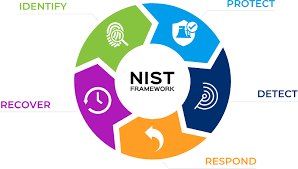
Identify – Develops organizational understanding of cybersecurity risks to systems, assets, data, and capabilities.
Protect – Implements appropriate safeguards to ensure delivery of critical services.
Detect – Develops and implements activities to identify cybersecurity events promptly.
Respond – Takes action regarding detected cybersecurity incidents.
Recover – Maintains plans for resilience and restores capabilities impaired during cybersecurity incidents.
NIST 800-53 provides detailed security and privacy controls, while NIST 800-171 addresses requirements for organizations handling Controlled Unclassified Information (CUI). The recent NIST Cybersecurity Framework v2.0 introduces enhanced governance elements and supply chain considerations.
Key Differences Between SOC 2 and NIST
Purpose and Application
SOC 2 functions primarily as a compliance requirement. Organizations undergo formal audits to demonstrate adherence to security controls, producing reports that customers and partners can review. This framework works best for service organizations needing to prove their security practices to external stakeholders.
NIST serves as a guidance framework. Organizations adopt NIST principles to improve their cybersecurity posture without requiring formal certification. The framework’s flexibility allows customization based on organizational size, industry, and risk profile.
Industry Focus
SOC 2 targets service organizations handling customer data. Technology companies, particularly SaaS providers, often require SOC 2 compliance to meet customer contractual obligations. Healthcare, financial services, and other data-sensitive industries frequently mandate SOC 2 reports from their vendors.
NIST applies across industries but sees heavy adoption in government, critical infrastructure, and organizations with federal contracts. The framework’s broad applicability makes it suitable for manufacturing, healthcare, education, and various other sectors.
Implementation Approach
SOC 2 implementation follows a structured path toward audit readiness. Organizations must document policies, implement controls, gather evidence of effectiveness, and undergo third-party evaluation. The SOC 2 compliance framework requires significant preparation and ongoing maintenance.
NIST implementation offers more flexibility. Organizations can adopt relevant sections based on their specific needs and risk tolerance. Companies might implement the full framework or focus on particular functions that address their primary concerns.
Cost Considerations
SOC 2 involves direct audit costs ranging from $15,000 to $50,000 annually, depending on organizational complexity and auditor selection. Additional costs include internal resources for preparation, documentation, and ongoing compliance maintenance.
NIST implementation costs vary significantly based on scope and existing security maturity. While no audit fees exist, organizations invest in risk assessments, control implementation, staff training, and periodic reviews. The voluntary nature allows for phased implementation aligned with budget constraints.
Choosing the Right Framework
Business Requirements
Companies providing services to enterprise customers often find SOC 2 compliance necessary for contract negotiations. Many enterprise clients require SOC 2 reports before engaging with new vendors, making compliance a business enabler rather than just a security measure.
Organizations focused on internal risk management might benefit more from NIST adoption. The framework’s comprehensive approach to risk identification and mitigation supports broader security program development.
Regulatory Environment
Certain industries face specific compliance mandates. Healthcare organizations subject to HIPAA requirements might find SOC 2’s privacy criteria particularly relevant. Financial services firms often require both frameworks—SOC 2 for vendor management and NIST for operational risk management.
Government contractors typically must demonstrate NIST compliance, particularly NIST 800-171 for CUI handling. Federal agencies and their suppliers often mandate NIST framework adoption.
Organizational Maturity
Companies with limited security resources might start with targeted NIST implementation, focusing on core functions before expanding scope. The framework’s modular approach enables the gradual development of a security program.
Organizations ready for formal audit processes and possessing adequate compliance resources can pursue SOC 2 certification. This approach requires dedicated personnel and established documentation practices.
Implementation Strategies
SOC 2 Implementation Path
Begin with gap analysis to identify control deficiencies against the five Trust Service Criteria. Develop policies and procedures addressing identified gaps, focusing on evidence collection and documentation practices.
Select appropriate auditors early in the process. Experienced SOC 2 auditors can provide valuable guidance during preparation phases, helping organizations avoid common pitfalls and reduce remediation cycles.
Establish continuous monitoring practices to maintain compliance between audit cycles. Regular internal assessments help identify issues before formal audits, reducing the risk of qualified opinions or management letter comments.
NIST Implementation Approach
Start with the framework’s Identify function to understand current risk posture and existing security measures. This assessment provides the foundation for targeted improvement efforts.
Prioritize implementation based on organizational risk tolerance and resource availability. High-risk areas typically receive immediate attention, while lower-priority items can follow phased implementation schedules.
Develop metrics and reporting mechanisms to track progress and demonstrate value to leadership. Regular reviews ensure the framework remains aligned with changing business requirements and threat landscapes.
Integration Opportunities
Many organizations benefit from implementing both frameworks simultaneously. SOC 2 provides external validation for customer-facing requirements, while NIST supports comprehensive internal risk management.
Mapping exercises help identify overlapping controls, reducing implementation effort and avoiding duplicated work. Common elements include access controls, incident response procedures, and risk assessment practices.
Organizations can leverage SOC 2 audit activities to validate NIST control effectiveness, creating synergies between compliance and risk management efforts.
Conclusion
Both frameworks continue evolving to address emerging threats and technology changes. Cloud computing, artificial intelligence, and supply chain risks receive increased attention in recent updates.
Organizations should monitor framework developments and adjust their implementation accordingly. Staying current with best practices ensures continued effectiveness and regulatory alignment.
The integration of frameworks reflects industry trends toward comprehensive security programs rather than single-framework approaches. This evolution supports more mature and resilient cybersecurity posture