
Complyan at CYSEC Kuwait 2026: What Kuwait Organizations Are Prioritizing in Compliance and GRC

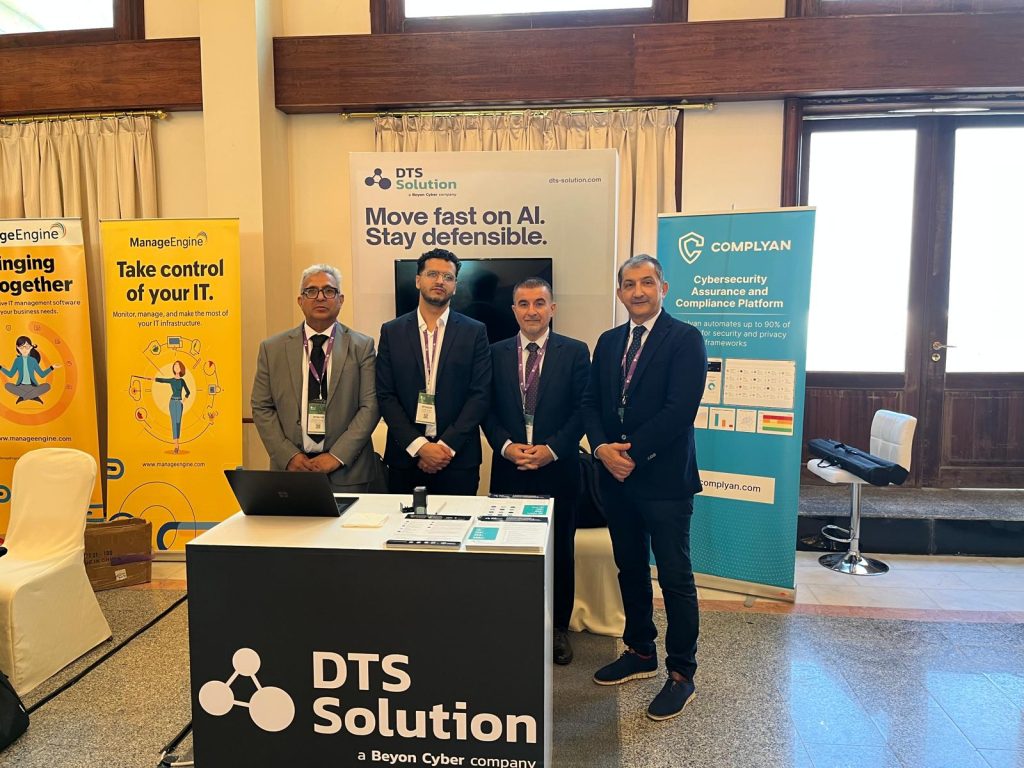
On 30 September, the Complyan team exhibited at CYSEC Kuwait 2026 at the Radisson Blu Hotel in Kuwait City, alongside cybersecurity leaders, government stakeholders, and technology decision-makers. The summit was the 23rd global edition of the CYSEC series, and the organizers’ event page framed it around “Fortifying Kuwait’s Digital Horizon: Secure, Evolve, Prosper.”
For us, the day was a checkpoint on what organizations in Kuwait are dealing with now. The conversations centered on regulatory pressure, provable cyber resilience, and the governance questions raised by broader AI adoption.
These priorities match the work Complyan supports across Kuwait’s frameworks, including CBK CORF, NBCC, privacy regulation, third-party risk, and audit evidence.
Kuwait’s Compliance Stack Is Getting More Complex
Kuwait organizations are working against several instruments at once, each with its own scope and clock.
The Central Bank of Kuwait issued CORF on 3 December 2025. According to Baker Tilly Kuwait, it applies to all CBK-regulated entities, including Kuwaiti banks, foreign banks operating in Kuwait, and finance companies. Times Kuwait has since reported a CBK directive requiring exchange companies and electronic payment providers to obtain external CORF assessments.
The National Cyber Security Centre followed with the NBCC under Decision No. 2 of 2026, a mandatory baseline with 18 months to full compliance. Complyan’s NBCC guide covers who falls under it.
Telecom and IT licensees face a separate rule: under CITRA’s privacy regulation, breach reporting within 24 hours, per DLA Piper. Complyan’s guide to Kuwait’s privacy regulations walks through what that means in practice.
Resilience Has to Be Provable
A question came up repeatedly: when an assessor asks, can we show the control working?
Security teams are being asked for records, not statements of intent. A policy does not answer a request for the access review, the test result, or the incident log for a given period. Banks, government entities, and critical infrastructure operators need evidence that is current, owned, and easy to retrieve.
Complyan’s audit and compliance management platform keeps that evidence attached to each control, so a request becomes a lookup. Complyan’s executive and board reporting gives leadership a current view of control status between assessments.
CBK CORF and SWIFT CSP: One Evidence Base
For financial institutions, CORF and SWIFT CSP raised the same question: how do we show controls are implemented, tested, and capable of supporting resilience?
Baker Tilly’s CORF summary lists the deliverables: the Cyber Resilience, Operational Resilience, and Third-Party Risk Management baselines, an inherent risk profile, a Statement of Applicability, baseline self-assessments, independent assessments, and regulatory submissions to the CBK. SWIFT users separately assess and attest against SWIFT’s Customer Security Controls Framework, as Complyan’s SWIFT CSCF guide explains.
These requests draw on the same systems and teams: access control, vulnerability management, testing, monitoring, incident response, and governance. Complyan’s cybersecurity compliance tools map each control once, so one test or review record counts toward every framework it overlaps.
Third-party risk is the third baseline, and suppliers sit across all of these requirements. Complyan’s third-party risk management keeps supplier assessments current rather than frozen at onboarding.
AI Governance Is Now Part of the Compliance Program
AI was part of the same conversation. Organizations are deploying generative AI, LLM applications, and AI agents into workflows that touch sensitive information, and compliance teams are being asked who owns each system and what has been assessed.
Visibility is the gap. ISACA’s 2026 AI Pulse Poll found that 56 percent of more than 3,400 digital trust professionals did not know how quickly they could halt an AI system during a security incident. The first step is knowing where AI touches data, which Complyan’s data flow and mapping tools trace by system and destination. ISO/IEC 42001, the certifiable standard for AI management systems, then gives that work a structure auditors recognize.
Continuing Our Work in Kuwait
CYSEC Kuwait 2026 gave us another opportunity to speak directly with the teams shaping the country’s compliance priorities.
Complyan supports Kuwait organizations working on CBK CORF, NBCC, privacy, third-party risk, and audit readiness through control mapping, evidence management, and reporting. For the earlier CBK framework and cloud rules, see Complyan’s CBK CSF guide and Complyan’s CITRA guide.
Need support with your compliance program in Kuwait? Talk to the Complyan team about the next step.
Governance and Policy Management